|
|
|
|
|
|
|
|
|
|
Clemente Family Update 3/07/2025
|
|
|
|
|
|
|
|
|
|
|
|
|
|
|
|
|
|
|
|
|
|
|
Cash Assistance for CPS Families Experiencing Homelessness
To be eligible for this financial assistance, families must:
|
- Currently be experiencing housing instability or homelessness
- Have a child who is 17 or younger and enrolled in Chicago Public Schools
- Have a member of the family receiving SNAP, TANF, or VTTC benefits.
After being selected by lottery, 750 families will receive a $6500 payment, and 750 families will receive $500. Applications are open now, and the deadline to apply is March 9, 2025.
|
|
This pilot program aims to understand the impact of this one-time cash assistance pilot on families’ housing stability, as well as its impact on other measures of well-being for the entire family. For more information or to apply, click here, or speak with the STLS liaison at your school.
|
|
|
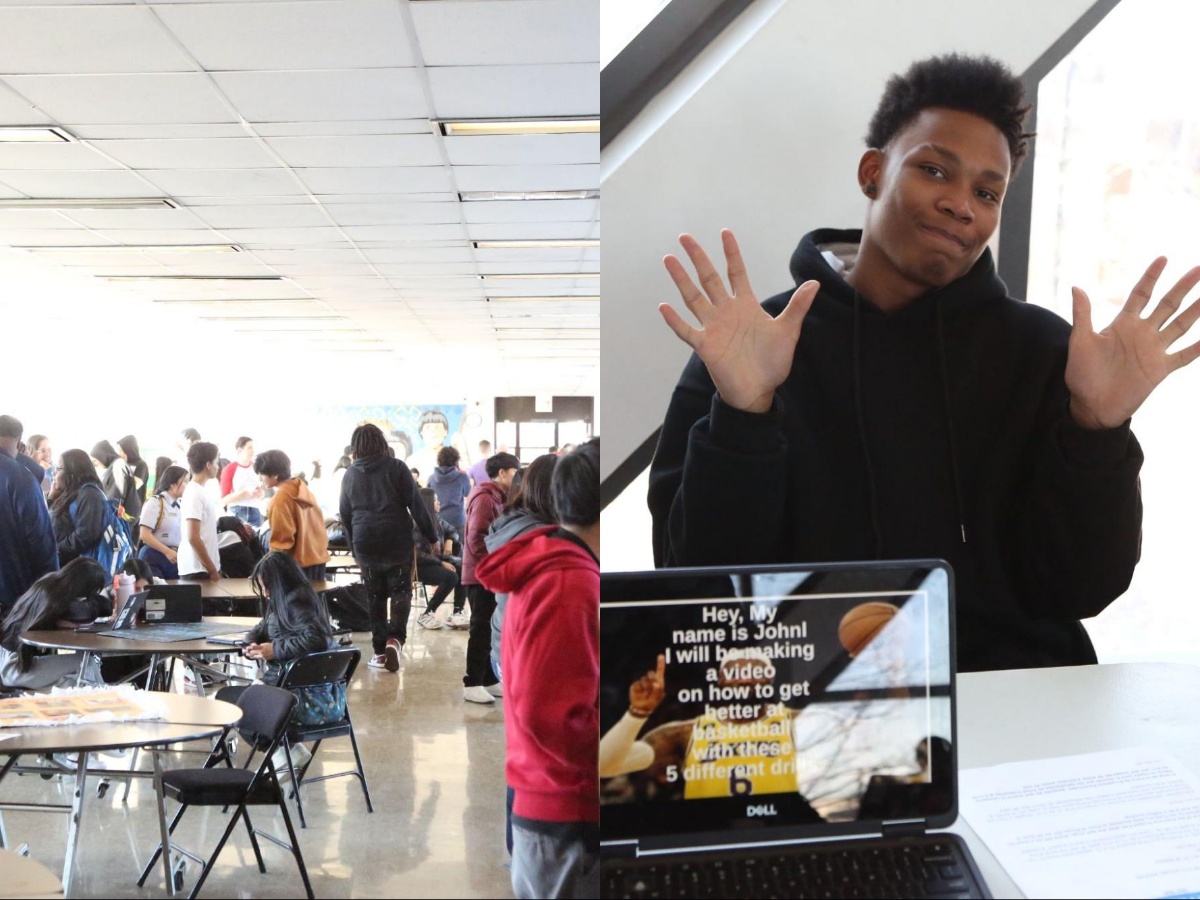
Last week, sophomores showed off their hard work on their Personal Projects at the annual Personal Project Fair. Projects ranged from cooking traditional recipes to investigations about the history of video games to creative writing endeavors. Freshmen classes, along with staff and families, were able to get a taste of what Personal Project is all about and celebrate students’ achievements. A huge thank you to the families who came along with all the staff support in making it happen!
|
To wrap up the final component of their Personal Projects, sophomores will be working on their final papers next week in History classes. The final papers will be submitted to the IB for an official score and certificate to recognize the accomplishments of the sophomores in completing this capstone project.
|
La semana pasada, los estudiantes de décimo grado mostraron su arduo trabajo en sus Proyectos Personales en la Feria Anual de Proyectos Personales. Los proyectos abarcaron desde cocinar recetas tradicionales hasta investigaciones sobre la historia de los videojuegos y trabajos de escritura creativa. Las clases de noveno grado, junto con el personal y las familias, pudieron conocer de qué se trata el Proyecto Personal y celebrar los logros de los estudiantes. ¡Un enorme agradecimiento a las familias que vinieron junto con todo el apoyo del personal para que esto sucediera!
|
|
Para finalizar el componente final de sus Proyectos Personales, los estudiantes de décimo grado trabajarán en sus trabajos finales la próxima semana en las clases de Historia. Los trabajos finales se enviarán al IB para obtener una calificación oficial y un certificado para reconocer los logros de los estudiantes de segundo año en la finalización de este proyecto final.
|
|
|

|
|
This week in Structured Literacy we are beginning to cover Multisyllabic words and how we can utilize syllables to help us understand the spelling of unknown words! Our High Frequency Sight words for this unit are: Friend, Want, Front, Pull, Put, Push, Often and Full.
|
|
|
|
|

|
A topic we’ve discussed often in Individuals and Societies class (history) is the idea of identity. Who are we? How does this impact the way we interact with each other? With the world? It is often our identities, both collective and individual, that lead to violence and political and cultural shifts, both in the past and present.
|
This week in class we drew parts of our identities at different levels of society. Who are we at a local level, at a regional level? Who are we nationally and globally? Students brainstormed elements of who they are in each context and illustrated them. Then, in a gallery walk, they observed each other's drawings, looking for similarities and differences. Every student included their flag or national identity as one of the elements. This led to a discussion on how our identities can often overlap in ways that historically did not occur. Before the 19th century, nationality was not a common identifier. Instead communities identified with their religion, cultural practices, or belief systems. It wasn't until the rise of political and social revolutions in the 19th century when nationalism, when nationality, began to exist as a concept that people bought into and used to identify themselves. We will continue to use the idea of national identity to better understand the regional and global conflicts as we move forward into the 20th century.
|
Un tema que hemos hablado a menudo en la clase de Individuos y Sociedades (historia) es la idea de la identidad. ¿Quiénes somos? ¿Cómo afecta esto la forma en que interactuamos entre nosotros? ¿Con el mundo? A menudo son nuestras identidades, tanto colectivas como individuales, las que conducen a la violencia y a los cambios políticos y culturales, tanto en el pasado como en el presente.
|
|
En clase esta semana dibujamos partes de nuestras identidades a diferentes niveles de la sociedad. ¿Quiénes somos a nivel local, a nivel regional? ¿Quiénes somos a nivel nacional y global? Los estudiantes pensaron en los elementos de quiénes son en cada contexto y los ilustraron. Luego, en formato de galería, observaron los dibujos de los demás, buscando similitudes y diferencias. Por decisión propia, cada estudiante incluyó su bandera o identidad nacional como uno de los elementos. Esto llevó a una discusión sobre cómo nuestras identidades a menudo pueden superponerse de maneras que históricamente no ocurrían. Antes del siglo XIX, la nacionalidad no era un identificador común. En cambio, las comunidades se identificaban con su religión, prácticas culturales o sistemas de creencias. No fue hasta el surgimiento de las revoluciones políticas y sociales del siglo XIX cuando el nacionalismo, o la nacionalidad, empezó a existir como un concepto que la gente adoptó y utilizó para identificarse. Seguiremos utilizando la idea de la identidad nacional para comprender mejor los conflictos regionales y globales a medida que avancemos hacia el siglo XX.
|
|
|
|
|
|
|
|
|
|
|
|
|
|
|
|
|
|
|
|

|
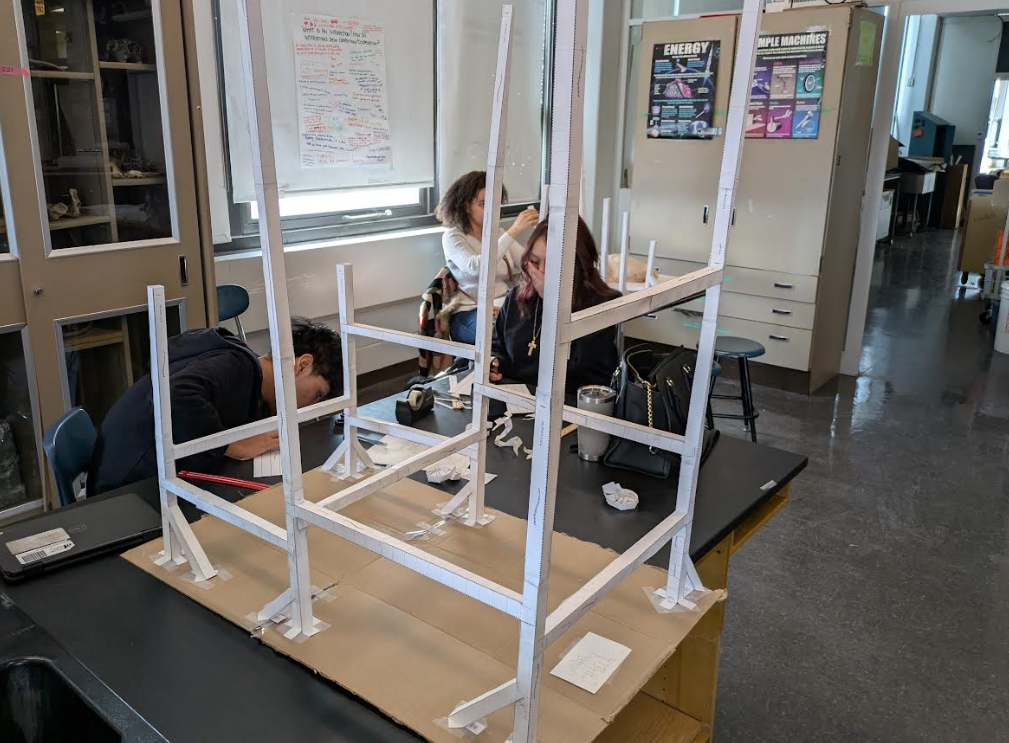
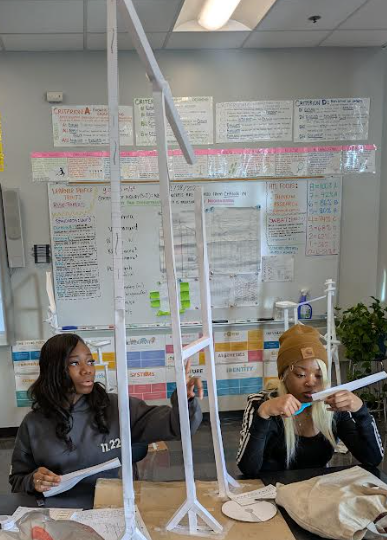
For this unit in physics, students have been learning and testing potential, kinetic, and mechanical energy as well as determining the work done by a machine within a system. Students are combining their knowledge with their creativity in order to design and build their own cardstock coasters. These NGSS models will help students show the conservation of momentum within a system while also giving them a macroscale model of the energies they have learned about as well as observe how energy is lost in a system. Students are working in teams and have been providing feedback, support, and challenges to one another throughout the project. This week in class was devoted to students building out their models which will be finished up next week. After that, they will be able to use their own builds to calculate their energies, velocity, yields and losses. We look forward to seeing their final products!
|
|
Para esta unidad de física, los estudiantes han estado aprendiendo y probando la energía potencial, cinética y mecánica, así como también determinando el trabajo realizado por una máquina dentro de un sistema. Los estudiantes combinan sus conocimientos con su creatividad para diseñar y construir sus propios posavasos de cartulina. Estos modelos NGSS ayudarán a los estudiantes a mostrar la conservación del impulso dentro de un sistema y, al mismo tiempo, les brindarán un modelo a macroescala de las energías que han aprendido, así como a observar cómo se pierde energía en un sistema. Los estudiantes trabajan en equipos y se han brindado retroalimentación, apoyo y desafíos unos a otros durante todo el proyecto. Esta semana en clase se dedicó a que los estudiantes construyeran sus modelos que estarán terminados la próxima semana. Después de eso, podrán usar sus propias configuraciones para calcular sus energías, velocidad, rendimientos y pérdidas. ¡Esperamos ver sus productos finales!
|
|
|
|

|
United States Naval Academy Admissions Forums in Illinois. This event is open to all students (middle school and high school), family members, and educators.
|
At this event, you will receive an overview of the Naval Academy and Admissions Process presented by USNA admissions staff (Admission Counselor and Regional Director of Admissions). In addition, we will have the following guest speakers: local Blue & Gold Officers (USNA Admission Volunteers), Parent Club representatives, Congressional Staffers, NROTC Scholarship Coordinator, and NROTC - Marine Option Scholarship Coordinator.
|
|
Summer Seminar kick-starts your Naval Academy application by giving you a taste of life at the Academy. For one week in June, you will experience first-class academic, athletic, and professional training while building lifelong friendships with campers from all over the world. Current 11th graders can apply for this program.
|
|
Summer STEM at the Naval Academy is a vibrant week of problem-solving, exp
|
|
|
|
🚨 Scholarship Opportunity – Win $2,500! 🚨
|
Cirkled In is offering a $2,500 “No Sweat” Scholarship with no GPA or income requirements and no long essays! Open to all students—use the award for any educational need.
|
|
✅ Apply by March 31st, 2025
|
|
🚨 ¡Oportunidad de beca – Gana $2,500! 🚨
|
Cirkled In ofrece una beca “No Sweat” de $2,500, sin requisitos de GPA o ingresos y sin ensayos largos. ¡Está abierta a todos los estudiantes y puedes usar el premio para cualquier necesidad educativa!
|
|
✅ Aplica antes del 31 de marzo de 2025
|
|
|
|
|
|
|
|
|
|
|
|
|
|
|
|
|